
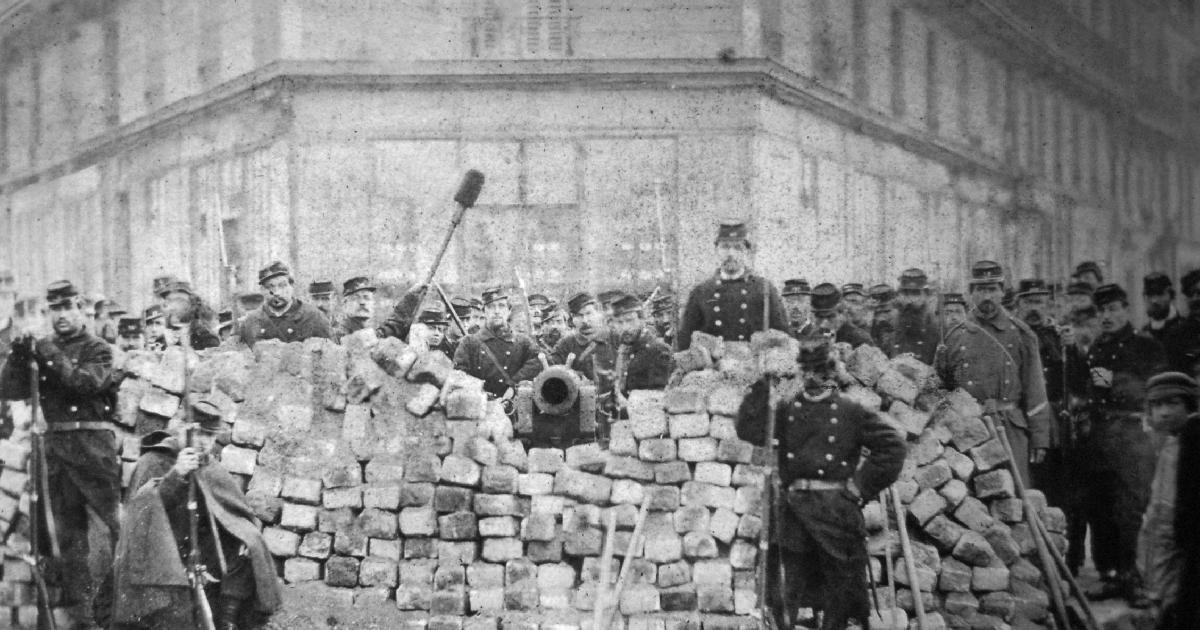
Marx and the 1871 Paris Commune


Introduced by Perth socialist, Erin Russell.
The Paris Commune of 1871 was the first time in history that the working class rose up to run an entire city, replacing the existing state to form one of their own. This was a pivotal event for Marx’s analysis of workers’ revolution, provoking him to edit the Communist Manifesto to include, “the working class cannot simply lay hold of the ready-made state machinery and wield it for its own purposes”. His previously abstract theorizing on how the working class should confront the state had been tested by the Commune in living, breathing reality. During the Russian revolution, Lenin studied the Paris Commune to clarify his polemics against reformism, arguing for the need to smash the capitalist state and replace it with a workers’ state. The Commune has generated debates amongst various forces on the left, both during the Commune and in its wake. These debates are worth studying and forming our own opinions on in order to clarify some of the fundamental questions for Marxists - around class, the state, and the dynamics of workers’ revolution.
Readings
Donny Gluckstein - The Paris Commune: A revolution in democracy
Chapters 1, 2 and 6
Lenin, State and revolution chapter 3: The experiences of the
Paris Commune of 1871
https://www.marxists.org/archive/lenin/works/1917/staterev/ch03.htm
Marx, The Civil War in France
https://www.marxists.org/archive/marx/works/1871/civil-war-france/